The Real Reason Clients Stop Coming Back (It Is Not Always the Service)
Most service businesses assume client churn is about quality. The data says otherwise. Here is what is actually driving clients away.
When a regular client stops coming back, the instinct is to assume the service was not good enough. Sometimes that is true. But when you look at why service business clients actually churn, the quality of the work is rarely the primary reason.
Research on service industry retention consistently shows that clients leave because of how the experience felt, not just the outcome. Here is what that actually looks like.
They felt like a transaction, not a person
Clients who come back to the same barbershop or salon month after month are not just paying for a haircut or a manicure. They are paying to be known. When they walk in and their preferences are remembered, when their barber already knows they like it tapered on the sides, that feels like a relationship.
When they have to repeat themselves every single time, when no one can remember what they got last visit, the relationship feels one-sided. Eventually they find somewhere else.
Booking was too much friction
Clients have a threshold for how hard they will work to book an appointment. If reaching you requires sending a message and waiting hours for a reply, some clients will do it. Many will not.
Competitors with an online booking page are one tap away at any hour. When your process is slower or more uncertain than theirs, you lose clients who never tell you why.
They had a bad experience and said nothing
Research from the service industry suggests that for every client who complains, around 26 say nothing and leave. Silence is not satisfaction. It is often the signal of a client who has mentally moved on.
The clients who complain are the ones giving you a chance to fix it. The quiet ones are already shopping elsewhere.
For every client who complains, roughly 26 say nothing and do not come back.
They were never re-engaged after a gap
Life gets busy. Clients miss an appointment, intend to rebook, and then three months pass. Businesses that follow up when a regular client has gone quiet, with a simple 'we have not seen you in a while' message, recover a meaningful percentage of those clients.
Businesses that do nothing watch them drift to wherever is most convenient next time they remember.
The fix is operational, not just interpersonal
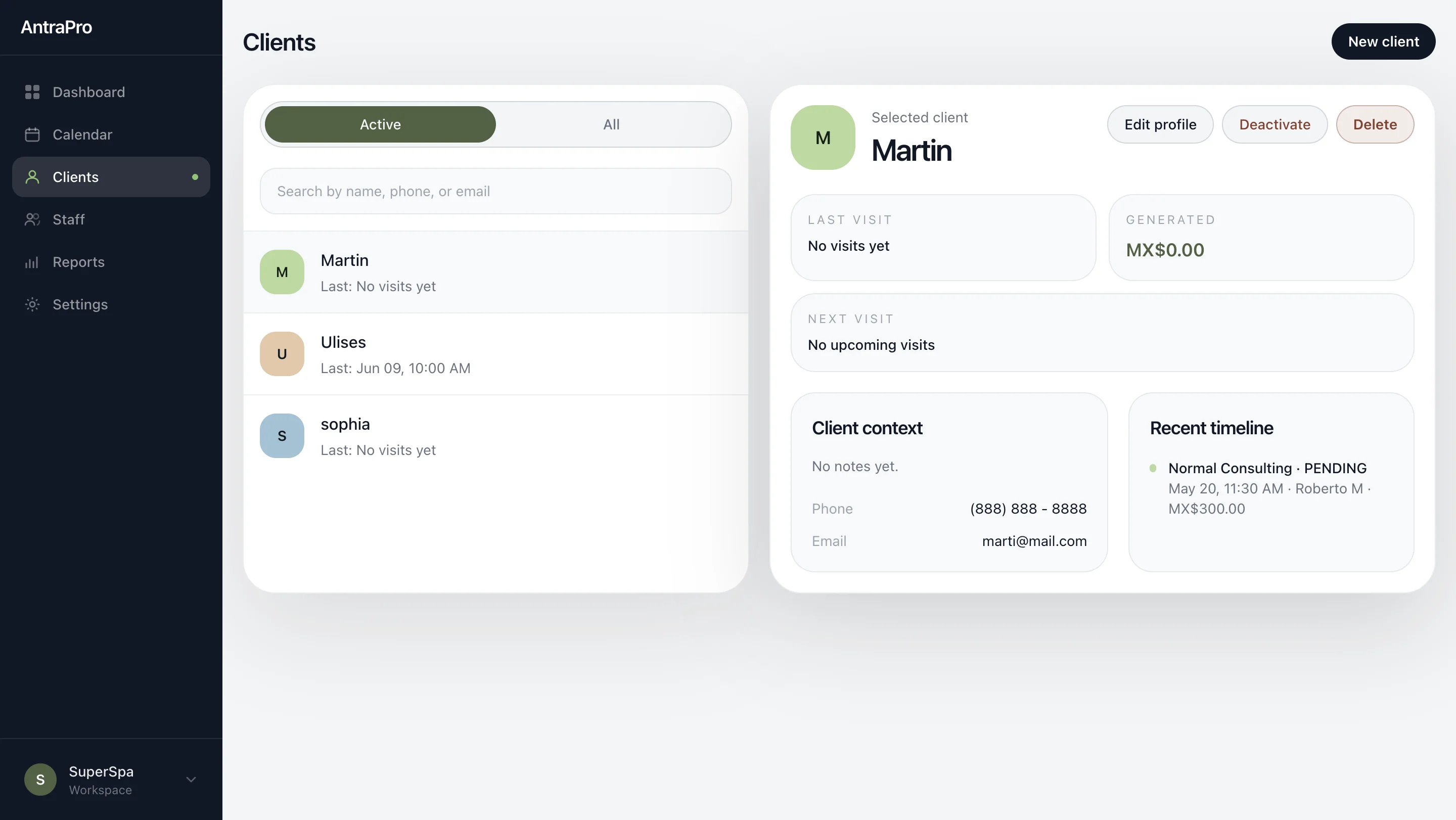
You cannot rely on memory and goodwill to retain clients at scale. You need systems: a record of each client's history, a way to spot who has gone quiet, and a booking process that stays out of the way.
Great service gets clients in the door. Systems are what keep them coming back.
Give every client a reason to return
Client history, notes, and a booking experience that does not make them work for it.
Get started →